One of the most common points of confusion after a water emergency is knowing who to call first – a plumber or a water damage restoration specialist. The answer matters more than most homeowners realise, because calling the wrong contractor first can mean the source keeps running while you wait, or it can mean a restoration crew shows up to a pipe that’s still actively leaking.
Understanding where plumbing ends and restoration begins is the key to managing any water event efficiently.
What a Plumber Fixes
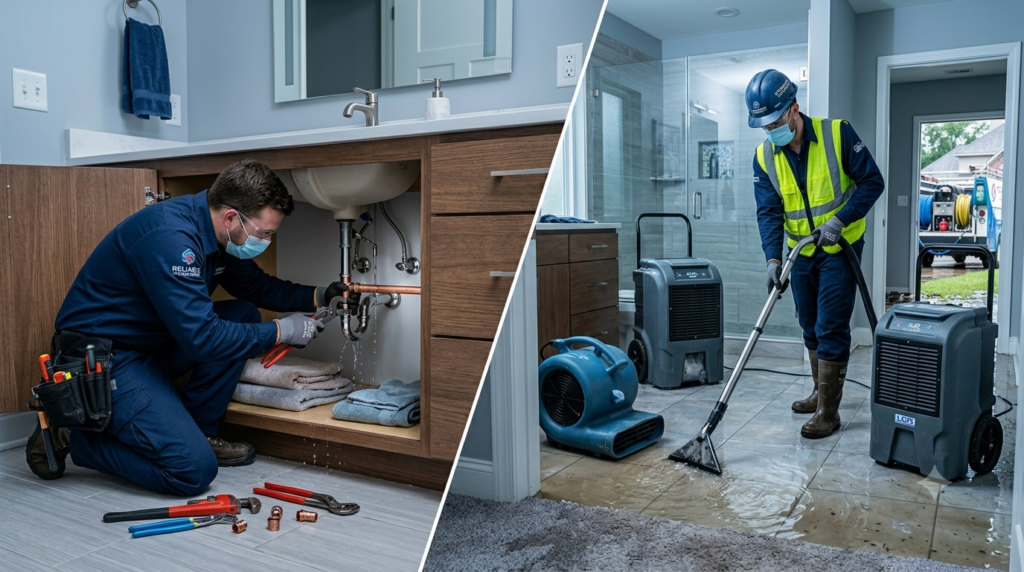
A plumber’s job is the source of the water problem. Their scope covers:
- Burst or cracked pipes (supply lines, drain lines, main water line) often require immediate professional repair from a licensed plumber.
- Failed appliance connections (washing machine hoses, dishwasher supply lines, ice maker lines)
- Slab leaks – pinhole failures in copper piping running under the concrete foundation
- Water heater failures – tank leaks, pressure relief valve discharge, or connection failures often require professional water heater repair or replacement services.
- Sewer backups and drain line obstructions
The plumber stops the water. They do not dry the structure, remediate mold, extract standing water, or restore damaged materials. Once the source is controlled, their involvement in the recovery is typically complete.
What a Water Damage Restoration Specialist Does
A water damage restoration contractor takes over from the point at which the water source is controlled. Their scope covers:
- Emergency water extraction using truck-mounted or portable pumps
- Structural drying using commercial dehumidifiers and air movers
- Moisture mapping using thermal imaging and pin/pin-less moisture meters to locate hidden saturation in walls, subfloor, and framing
- Content drying and pack-out for salvageable belongings
- Mold assessment and remediation if secondary damage has already begun
- Coordination with insurance adjusters and documentation of the drying process
Restoration contractors follow the IICRC S500 Standard for Professional Water Damage Restoration, which defines drying goals, documentation requirements, and acceptable moisture content ranges for each affected material class.
The Correct Sequence
For most residential water events, the sequence should be:
1. Call a plumber first — if the water source is still active (pipe burst, appliance failure, ongoing leak). The source must be controlled before extraction equipment can keep pace with inflow.
2. Call the restoration company simultaneously — don’t wait for the plumber to finish and leave before starting extraction. Every hour of standing water contact multiplies absorption into subfloor, drywall, and framing. Make both calls within the first 30 minutes of discovering the damage.
3. Call your insurance carrier — open the claim before any significant work begins. Your insurer may have a preferred vendor list, but you are not obligated to use it – you have the right to choose your own licensed contractor.
When Flooding Comes From Outside
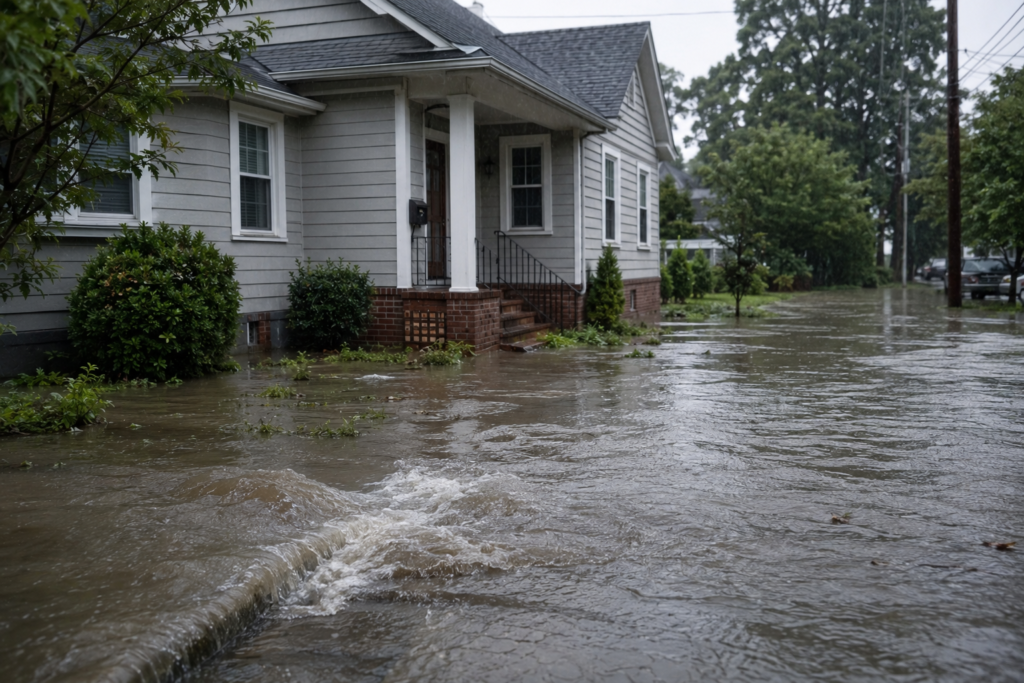
Plumbers are not involved when the water source is external – storm flooding, hurricane surge, or ground-water intrusion. In those cases, you go straight to a water damage restoration specialist, and the insurance claim follows the flood damage pathway (which in high-risk zones typically means a separate flood insurance policy through the National Flood Insurance Program) rather than a standard homeowners claim.
Coastal communities face this scenario regularly. Homeowners dealing with storm flooding – from Jacksonville south through the Space Coast and into Volusia County – need restoration specialists with hurricane and surge experience, not just plumbing repair. Providers experienced in Daytona Beach flood damage specialists understand the difference between Category 1 clean water (pipe burst) and Category 3 contaminated water (storm surge) – and treat them accordingly, because the remediation protocol, PPE requirements, and material salvageability decisions are entirely different between the two.
How to Describe the Event When You Call
When you call either a plumber or a restoration company, the information that matters most is:
- What is the water source? (known pipe, appliance, storm, unknown)
- Is the source still active?
- Approximately how much area is affected and with how much standing water?
- What materials are affected (carpet, hardwood, tile, drywall, subfloor)?
- When did the event occur?
That last question – timing – is especially important for restoration contractors. A two-hour-old water event and a two-day-old water event have completely different mitigation scopes. If there’s any chance of mold initiation (anything over 24–48 hours in warm, humid conditions), the restoration scope should include a mold assessment regardless of visible growth.
The Overlap Zone: Slab Leaks
Slab leaks are the one category where both trades are heavily involved simultaneously. The plumber locates and repairs the leak (often requiring jackhammering through the concrete slab). The restoration contractor manages the water damage to the flooring system, subfloor, and any wall cavities affected by capillary wicking from the slab.
This is a longer, more disruptive job than either a standard pipe repair or a standalone water extraction – typically running 5–10 days from detection to rebuild-ready – and requires both contractors to coordinate their work sequence carefully.
Conclusion
Burst pipe or appliance failure: plumber first, restoration company immediately after. Storm flooding or external water: restoration company first, insurance claim simultaneously. In both cases, speed determines cost – every hour of standing water is money spent on extended drying and potential mold remediation that a faster response would have avoided.
Know your contractors before you need them. Having both a licensed plumber and a certified water damage restoration company in your contacts list means you’re making two calls in the first ten minutes instead of spending an hour searching while the damage spreads.
Leave a Reply